

Periodontitis
Bleeding gums, bad breath, or loose teeth? These symptoms may indicate periodontitis – a chronic inflammation of the tooth-supporting structures that, if left untreated, can lead to tooth loss. These supporting structures include the gums as well as other tissues such as the jawbone.
Periodontitis is one of the most common widespread diseases worldwide. It often progresses slowly and without noticeable symptoms, which is why awareness and early detection are essential.
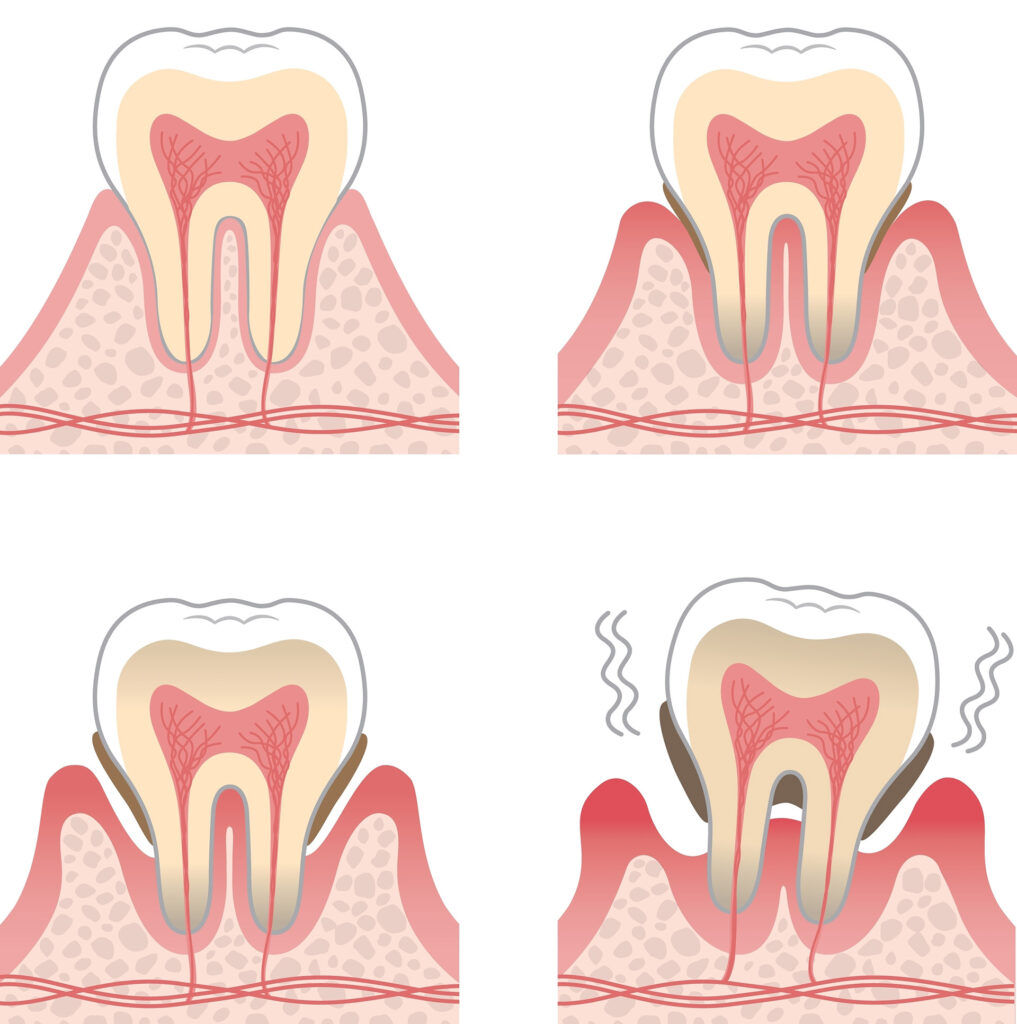
How Does Periodontitis Develop?
It usually begins with gum inflammation (gingivitis), caused by bacterial deposits (plaque) and tartar build-up. The gums may bleed, become swollen, and start to recede.
If the underlying causes are not treated, bacteria can spread further and attack the jawbone, causing inflammation there as well. The body’s strong immune response can then lead to bone loss, causing the teeth to lose their support.
The main risk factors for periodontitis include poor oral hygiene, smoking, stress, diabetes, pregnancy, and genetic predisposition.
Which Symptoms Should You Take Seriously?
- Bleeding gums (especially when brushing your teeth)
- Redness, swelling, or receding gums
- Bad breath
- Loose teeth
- Teeth appearing longer due to gum recession
Even one of these symptoms is a reason to visit us for a dental check-up.
How Do We Treat Periodontitis?
With a systematic periodontal therapy approach. The goal is to stop the inflammation and stabilise the supporting tissues.
Steps of Systematic Periodontal Therapy:
- Initial Phase: Professional dental cleaning and personalised oral hygiene guidance (see risk factors).
- Main Treatment: Thorough cleaning of the gum pockets under local anaesthesia (needle-free).
- Optional: Use of antibiotics (local or systemic) in aggressive cases.
- Aftercare: Regular check-ups and supportive maintenance therapy (recall programme).